Overview
Photo-identification is a technique used to identify and track individuals of a wild animal study population over time. It relies on capturing photographs of distinctive characteristics such as skin or pelage patterns or scars from the animal. In cetaceans, the dorsal fin area and tail flukes are commonly used.
Photo-identification is generally used as an alternative to other, invasive methods of tagging that require attaching a device to each individual. The technique enables precise counting, rather than rough estimation, of the number of animals in a population. It also allows researchers to perform longitudinal studies of individuals over many years, yielding data about the lifecycle, lifespan, migration patterns, and social relationships of the animals.
Species that are studied using photo-identification techniques include:
Killer whales
Humpback whales
Whale sharks
Manta rays - see Manta Matcher
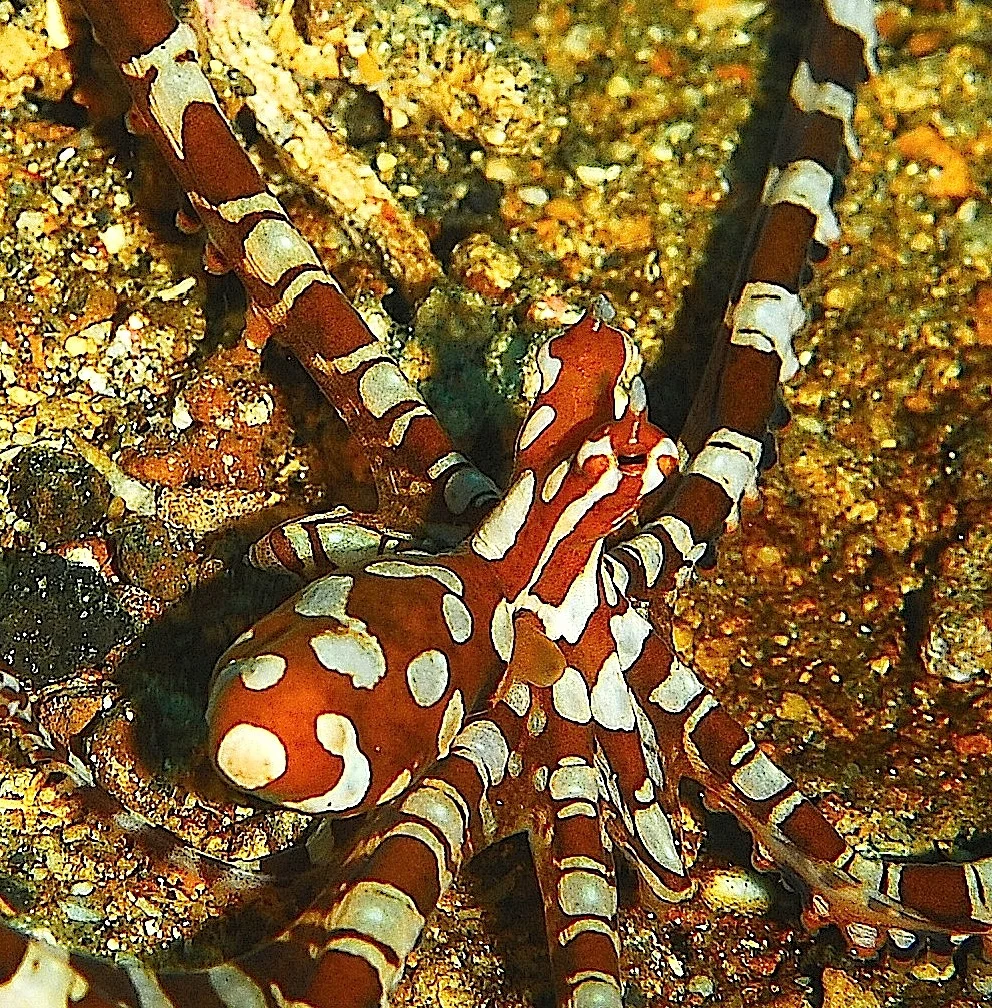
Octopuses (Wunderpus photogenicus)
Salamanders
Giraffes
Photo-identification is generally used as an alternative to other, invasive methods of tagging that require attaching a device to each individual. The technique enables precise counting, rather than rough estimation, of the number of animals in a population. It also allows researchers to perform longitudinal studies of individuals over many years, yielding data about the lifecycle, lifespan, migration patterns, and social relationships of the animals.
Species that are studied using photo-identification techniques include:
Killer whales
Humpback whales
Whale sharks
Manta rays - see Manta Matcher
Octopuses (Wunderpus photogenicus)
Salamanders
Giraffes
Habitat & distribution
Habitats
Marine
Sounds
A verified sound recording has not been linked yet. Auto Sync will keep checking xeno-canto and Wikimedia Commons.
References
- GBIF Auto Sync GBIF
- WoRMS / Aphia World Register of Marine Species
- Wikipedia — Wildlife photo-identification Wikipedia
No published comments yet.