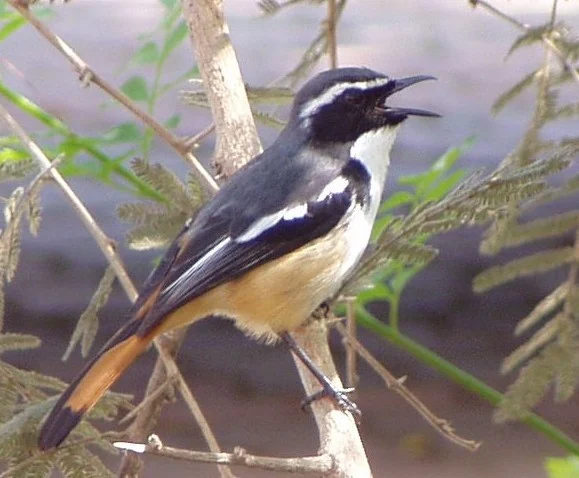
Overview
The white-throated robin-chat or white-throated robin (Dessonornis humeralis) is a species of bird in the family Muscicapidae. It is endemic to Botswana, Eswatini, Mozambique, South Africa, and Zimbabwe. Its natural habitats are dry savannah and subtropical or tropical dry shrubland.
Video
Sounds
Morning repertoire of a White-throated robin-chat, which delivers its song for some 15 minutes (12:25 included here) from the same perch in the upper branches of a bush clump with dense understory thicket, to which it could retreat for safety. It sings from 3-4 metres up in the open tree canopy, where it warms itself in the first rays of the morning sun. A second conspecific appears to answer from 2:40, right through, just within hearing distance. The original recording contains 138 phrases (the last 122 included in this clip), starting at 07:36 am and continuing for just over 14 minutes, i.e. a song phrase every 6 seconds. The sound graph suggests that the song is most vigorous soon after it starts, when perhaps the assumed male is most concerned with reestablishing his territory, and least vigorous in the last minute or so, when the sun is getting bright and other bird species noisier.
The recording was made late summer, and a northward migrating flock of European bee-eaters is audible from 8:30 in the clip, as they leave their night roost in a nearby tall Eucalypt. Additional background sounds are from Yellow-bellied greenbul (from 0:25), Black-headed oriole (1:10), Blue waxbill (1:40), Rock bunting (2:40), White-browed scrub robin (6:50), Cape turtle dove (from 7:13), Red-eyed dove (12:20) and Orange-breasted bushshrike, besides various scratching sounds when adjusting the recorder's cover, unfortunately.
The recording is from the centre of the Waterberg plateau, which is also at the centre of the species' range. A follow-up visit to the location at the start of June 2023 revealed no such morning repertoire at all, nor any perching at the top of trees. The song was replaced by less striking contact notes from the midst of thickets. This seems to be at odds with the Cape robin-chat, for instance, which sings vigorously at any time of the year.JMK · CC BY-SA 4.0
References
- GBIF Auto Sync GBIF
- Wikipedia — White-throated robin-chat Wikipedia
No published comments yet.