Overview
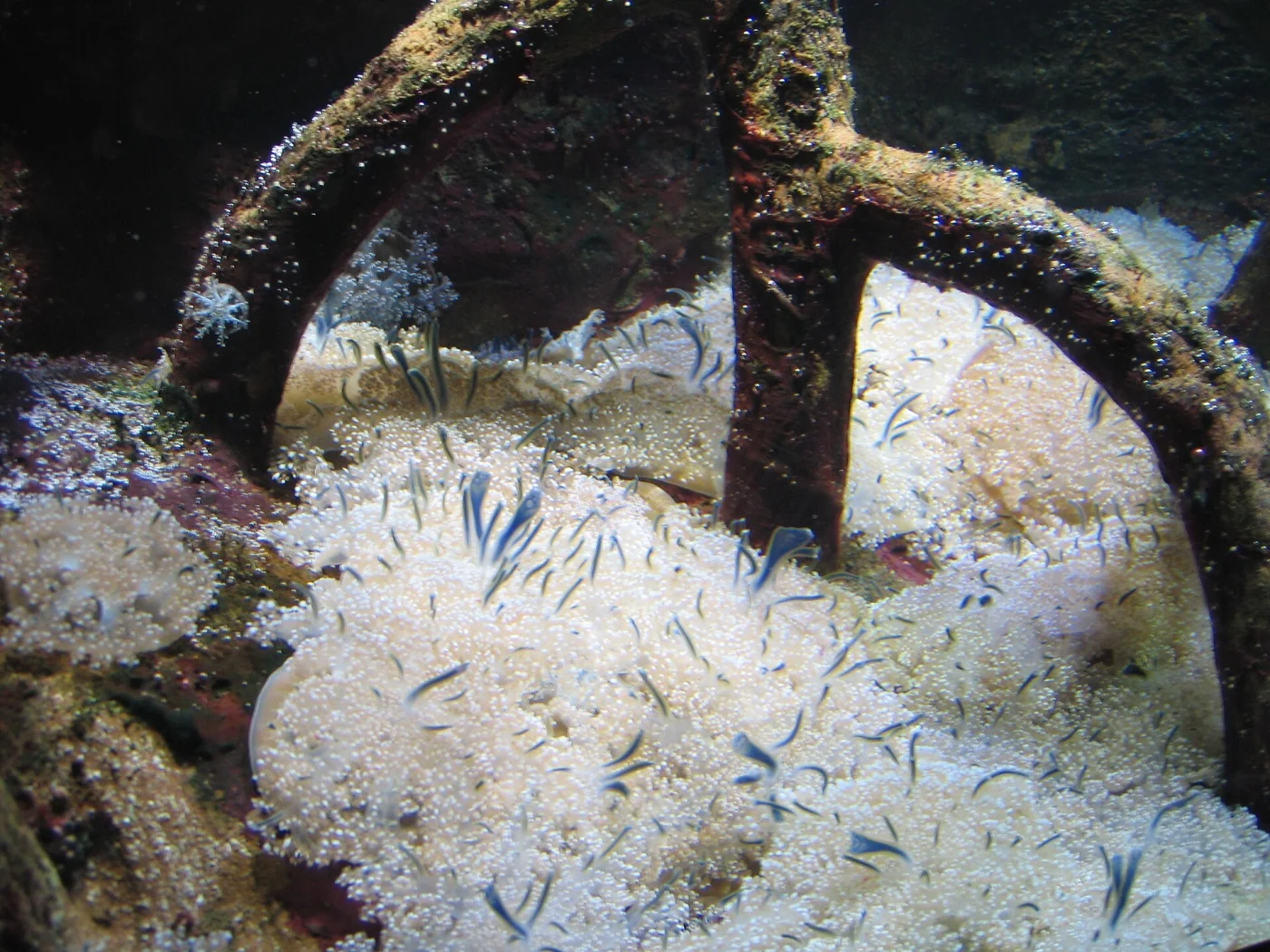
Cassiopea (upside-down jellyfish) is a genus of true jellyfish in the family Cassiopeidae. They are found in warmer coastal regions around the world, including shallow mangrove swamps, mudflats, canals, and turtle grass flats in Florida, the Caribbean and Micronesia. The medusa usually lives upside-down on the sea floor in shallow areas, which has earned them their common name. They have a symbiotic relationship with photosynthetic dinoflagellates and therefore must lie upside-down in areas with sufficient light. Where found, there may be numerous individuals with varying shades of white, blue, green, and brown. They have distinctive methods of reproduction and prey capture, and are unusual in that they appear to sleep despite lacking a brain. They also have toxic proteins in their mucus.
Habitat & distribution
Habitats
Brackish WaterMarine
Video
Sounds
A verified sound recording has not been linked yet. Auto Sync will keep checking xeno-canto and Wikimedia Commons.
References
- GBIF Auto Sync GBIF
- WoRMS / Aphia World Register of Marine Species
- Wikipedia — Cassiopea Wikipedia
No published comments yet.