Overview
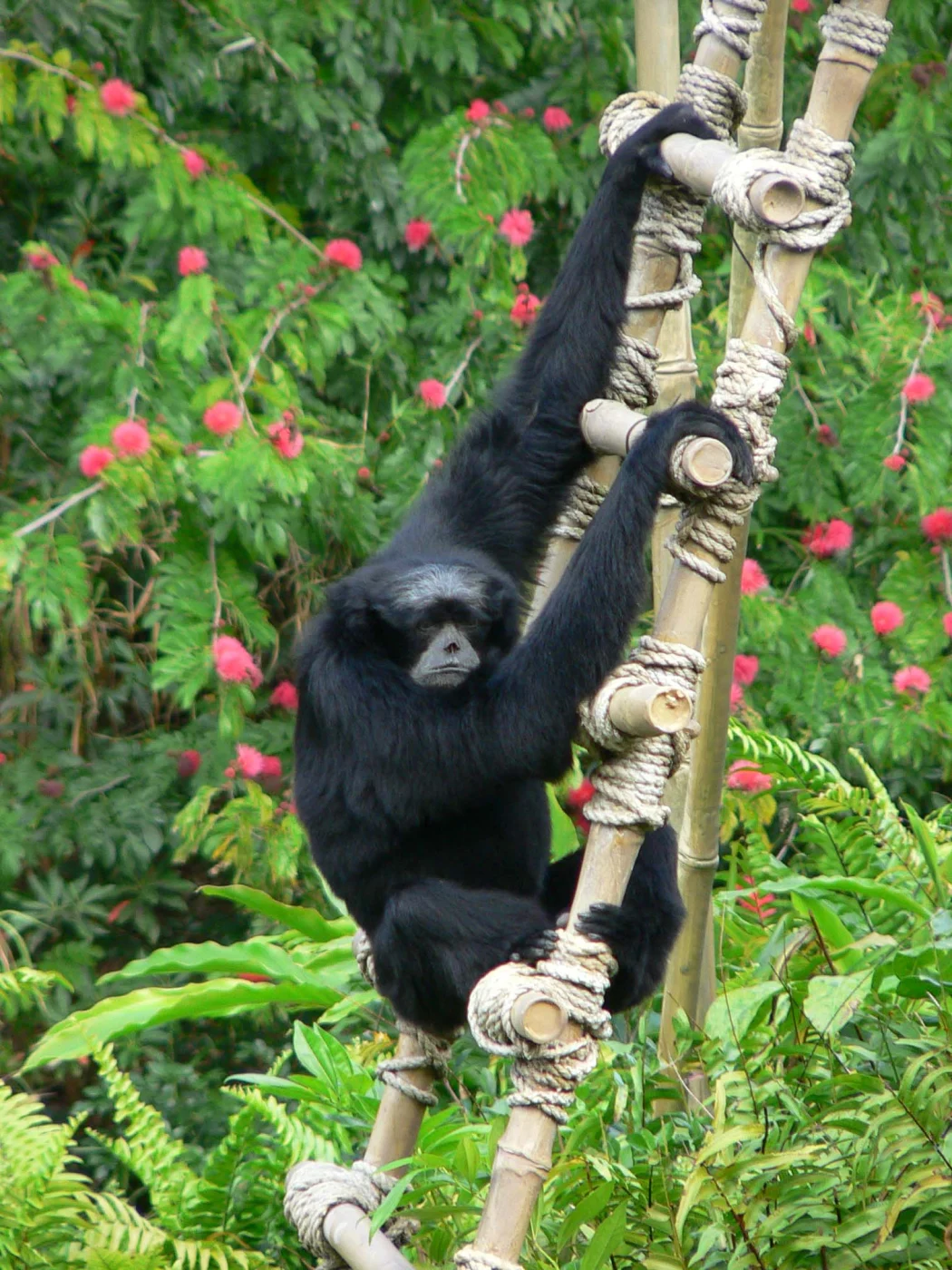
The siamang (, also UK: ; Symphalangus syndactylus) is an endangered arboreal, black-furred gibbon native to the tropical rainforests of Indonesia, Malaysia, and Thailand. The largest of the gibbons, the siamang can be twice the size of other gibbons, reaching 1 m (3.3 ft) in height, and weighing up to 14 kg (31 lb). It is the only species in the genus Symphalangus. Fossils of siamangs date back to the Middle Pleistocene.
Two features distinguish the siamang from other gibbons. First, two digits on each foot—the second and third toes—are partially joined by a membrane, hence the specific name syndactylus, from the Ancient Greek σύν, sun-, "with" + δάκτυλος, daktulos, "finger". Second, a large gular sac (throat pouch), found in both males and females of the species, can be inflated to the size of the siamang's head, allowing it to make resonating calls.
Two subspecies of the siamang are the nominate Sumatran siamang (S. s. syndactylus) and the Malaysian siamang (S. s. continentis, in Malay Peninsula). Otherwise, the Malaysian individuals are only a population. The siamang occurs sympatrically with other gibbons; its two ranges are entirely within the combined ranges of the agile gibbon...
Two features distinguish the siamang from other gibbons. First, two digits on each foot—the second and third toes—are partially joined by a membrane, hence the specific name syndactylus, from the Ancient Greek σύν, sun-, "with" + δάκτυλος, daktulos, "finger". Second, a large gular sac (throat pouch), found in both males and females of the species, can be inflated to the size of the siamang's head, allowing it to make resonating calls.
Two subspecies of the siamang are the nominate Sumatran siamang (S. s. syndactylus) and the Malaysian siamang (S. s. continentis, in Malay Peninsula). Otherwise, the Malaysian individuals are only a population. The siamang occurs sympatrically with other gibbons; its two ranges are entirely within the combined ranges of the agile gibbon...
Video
Sounds
A couple of siamangs, hylobates syndactylus, calling, recorded at Woodlang Park Zoo, Seattle, WADori · Public domain
References
- GBIF Auto Sync GBIF
- Wikipedia — Siamang Wikipedia
No published comments yet.