Overview
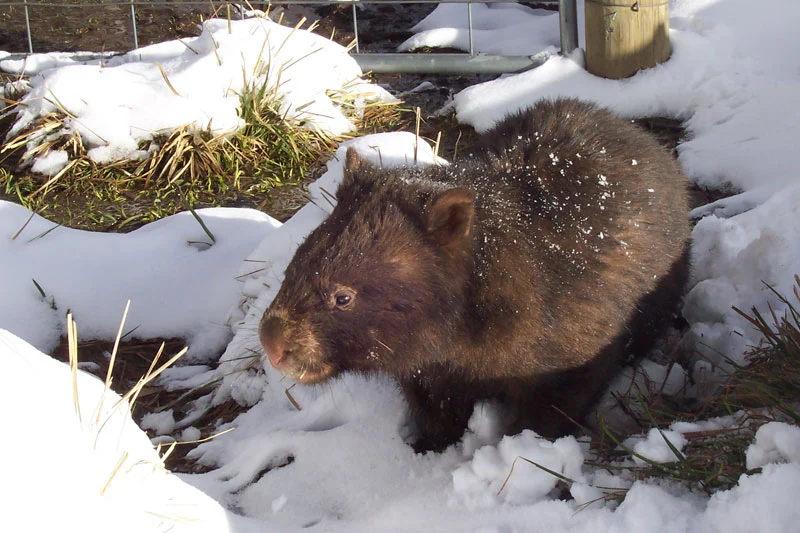
The common wombat (Vombatus ursinus), also known as the bare-nosed wombat, is a marsupial, one of three extant species of wombats and the sole extant member of the genus Vombatus. It has three subspecies: Vombatus ursinus hirsutus, found on the Australian mainland;
Vombatus ursinus tasmaniensis (Tasmanian wombat), found in Tasmania; and Vombatus ursinus ursinus (Bass Strait wombat), found on Flinders Island and Maria Island in the Bass Strait.
The mainland subspecies is the largest of the three, with its largest specimens measuring up to 1.2 m (3 ft 11 in) and 35 kg (77 lb). The common wombat is herbivorous, mainly nocturnal, and lives in burrows. Being a marsupial, its joeys inhabit a pouch on the mother for around five months after birth.
Vombatus ursinus tasmaniensis (Tasmanian wombat), found in Tasmania; and Vombatus ursinus ursinus (Bass Strait wombat), found on Flinders Island and Maria Island in the Bass Strait.
The mainland subspecies is the largest of the three, with its largest specimens measuring up to 1.2 m (3 ft 11 in) and 35 kg (77 lb). The common wombat is herbivorous, mainly nocturnal, and lives in burrows. Being a marsupial, its joeys inhabit a pouch on the mother for around five months after birth.
Video
Sounds
A verified sound recording has not been linked yet. Auto Sync will keep checking xeno-canto and Wikimedia Commons.
References
- GBIF Auto Sync GBIF
- Wikipedia — Common wombat Wikipedia
No published comments yet.