Overview
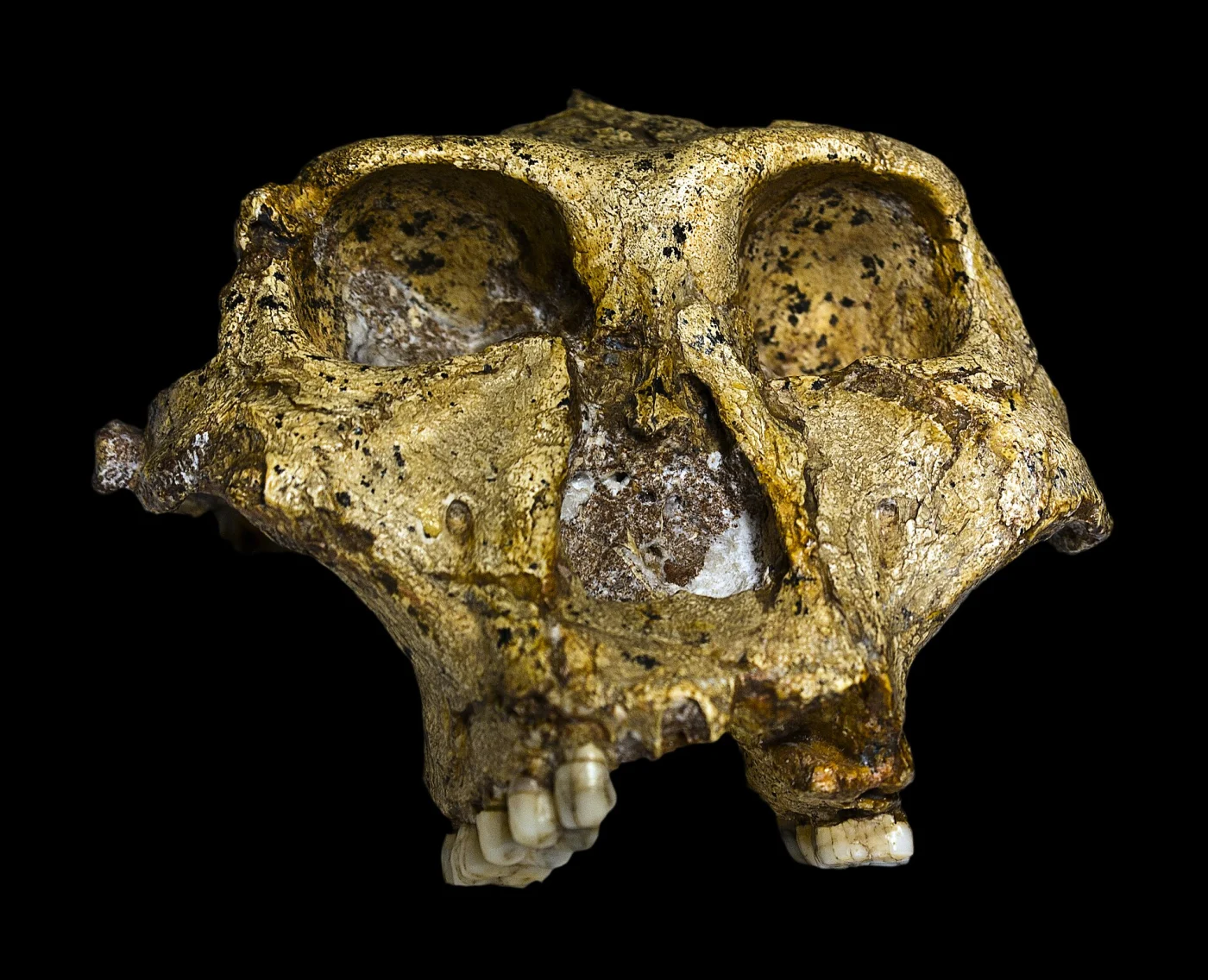
Paranthropus robustus is an extinct species of robust australopithecine from the Early and possibly Middle Pleistocene of the Cradle of Humankind, South Africa, about 2.27 to 0.87 (or, more conservatively, 2 to 1) million years ago. It has been identified in Kromdraai, Swartkrans, Sterkfontein, Gondolin, Cooper's, and Drimolen Caves. Discovered in 1938, it was among the first early hominins described, and became the type species for the genus Paranthropus. However, it has been argued by some that Paranthropus is an invalid grouping and synonymous with Australopithecus, so the species is also often classified as Australopithecus robustus.
Robust australopithecines—as opposed to gracile australopithecines—are characterised by heavily built skulls capable of producing high stresses and bite forces, as well as inflated cheek teeth (molars and premolars). Males had more heavily built skulls than females. P. robustus may have had a genetic susceptibility for pitting enamel hypoplasia on the teeth, and seems to have had a dental cavity rate similar to non-agricultural modern humans. The species is thought to have exhibited marked sexual dimorphism, with males substantially larger and more...
Robust australopithecines—as opposed to gracile australopithecines—are characterised by heavily built skulls capable of producing high stresses and bite forces, as well as inflated cheek teeth (molars and premolars). Males had more heavily built skulls than females. P. robustus may have had a genetic susceptibility for pitting enamel hypoplasia on the teeth, and seems to have had a dental cavity rate similar to non-agricultural modern humans. The species is thought to have exhibited marked sexual dimorphism, with males substantially larger and more...
Sounds
Pronunciation recording of German noun "Paranthropus robustus", IPA: /paˈʁantʁopʊs ʁoˈbʊstʊs/. Male voice, recorded by native German speaker from Berlin, Germany.Jeuwre · CC BY-SA 4.0
References
- GBIF Auto Sync GBIF
- Wikipedia — Paranthropus robustus Wikipedia
No published comments yet.